
So you’ve finally decided to make your business official. You’ve got the idea, the hustle, maybe even a few customers already. Now someone tells you, “Go and register your business with CAC.” You log onto the CAC portal, and suddenly you’re staring at two options: Business Name (BN) and Registered Company (RC).
You pause. Which one is for you
Corporate Affairs Commission (CAC) Registration
You’re not alone. This is one of the most common questions Nigerian entrepreneurs ask us at Digital Flames Limited every single week. And the truth is, picking the wrong one can cost you time, money, and missed opportunities — especially as your business starts to grow.
This guide will break it all down in plain English. No legal jargon. No long grammar. Just everything you need to decide in about 2 minutes.
First, What Is CAC and Why Does It Matter?
The Corporate Affairs Commission (CAC) is Nigeria’s official government body responsible for the registration and regulation of businesses. When you register with CAC, your business becomes legally recognised in Nigeria. It gets a unique registration number, a certificate, and the authority to operate as a formal entity.
Without CAC registration, your business exists only in your head and on your flyers. Banks won’t open a proper business account for you. Corporate clients won’t take you seriously. Government contracts are completely off the table. You can’t apply for most business loans. And if a dispute ever lands in court, you have very little legal standing.
In short, CAC registration is the foundation of every legitimate Nigerian business. It’s not just paperwork — it’s your business’s birth certificate.
The bigger question is: what type of registration should you get?
The Two Main Options: BN and RC Explained
What Is a Business Name (BN)?
A Business Name registration — abbreviated as BN — is the most basic and most popular form of business registration in Nigeria. It is typically used by sole proprietors and small business partnerships.
When you register a Business Name, you are simply giving your business a recognised trade name. For example, if your name is Tunde Adebayo and you’re running a photography studio, you can register it as Tunde Clicks Photography or Golden Lens Studios. The CAC will issue you a certificate of registration with a unique BN number.
However — and this is crucial — a Business Name is NOT a separate legal entity from its owner. This means that you and your business are legally the same. If your business incurs debt, you are personally liable. If someone sues your business, they are effectively suing you. Your personal savings, car, and assets are all exposed.
A BN registration is also tied to one or two individuals (or a maximum of 20 partners in a general partnership). You cannot issue shares, bring in investors through equity, or easily transfer ownership.
A Business Name is ideal if:
- You are a freelancer or solo entrepreneur just starting out
- Your business is small-scale and local in nature
- You don’t need to raise investor capital
- You want a quick, affordable, and straightforward registration
- You primarily need the certificate for a bank account or to appear more professional
What Is a Registered Company (RC)?
A Registered Company — abbreviated as RC — refers to what the Companies and Allied Matters Act (CAMA) calls a Limited Liability Company (Ltd). When most people say “register a company” in Nigeria, this is what they mean.
An RC is a completely separate legal entity from its founders. This is the key difference. Think of it like this: once you incorporate a company, you have created a new “person” in the eyes of the law. That company can own property, sign contracts, take loans, sue people, and be sued — all independently of you.
Because of this legal separation, your personal liability as a director or shareholder is limited. If the company goes bankrupt or gets into legal trouble, your personal assets are generally protected (as long as you haven’t done anything fraudulent).
An RC also has shareholders, directors, a Memorandum and Articles of Association (MEMART), and a registered share structure. This makes it easier to bring in co-founders, attract investors, and grow the business in a structured way.
RC companies are registered with a prefix like “ABC Solutions Limited” or “XYZ Tech Ltd.” The “Limited” at the end is not just a fashion statement — it signals to the world that this is a formal incorporated company with limited liability protections.
A Registered Company is ideal if:
- You are building a serious, scalable, or investor-ready startup
- You want to separate your personal finances from your business finances legally
- You need to pitch to investors, apply for grants, or open enterprise-level bank accounts
- You plan to hire employees formally and run payroll
- Your clients are corporations, government agencies, or multinationals that demand proper documentation
- You want to build something that can outlive you and be transferred or sold
BN vs. RC: A Side-by-Side Comparison
Let’s put the key differences on the table so you can see clearly:
| Feature | Business Name (BN) | Registered Company (RC) |
|---|---|---|
| Legal Status | Not a separate legal entity | Separate legal entity |
| Personal Liability | Owner is fully liable | Liability is limited to shares |
| Ownership | Individual or partnership | Shareholders and directors |
| Cost of Registration | Lower | Higher |
| Processing Time | 3–5 working days | 7–14 working days |
| Investor-Readiness | Not suitable for equity investment | Can issue shares to investors |
| Bank Account | Limited to personal-style accounts | Full business/corporate accounts |
| Suitability | Solo entrepreneurs, artisans, freelancers | Startups, SMEs, corporate entities |
| Annual Returns | Required | Required |
| Lifespan | Tied to owner | Can exist indefinitely |
Common Mistakes Nigerian Entrepreneurs Make
Mistake #1: Registering a BN and Thinking They’re “Fully Registered”
Many people register a Business Name and think that’s enough for everything. Then they go to bid for a government contract or approach a serious corporate client, and they’re told their BN is insufficient. Some opportunities specifically require an RC with a CAC certificate showing “Limited” in the name.
Mistake #2: Jumping Straight to RC When a BN Would Do
On the flip side, some founders register an RC when they’re still at the idea stage, just selling to friends and family. The higher cost, longer timeline, and additional compliance requirements (like annual returns, MEMART filings, and multiple director requirements) can be a burden when you’re not ready for that structure.
Mistake #3: Not Filing Annual Returns After Registration
Whether you register a BN or RC, the CAC requires you to file Annual Returns every year to keep your registration active. Failure to do so can lead to penalties and even having your business struck off the register. Many entrepreneurs complete their registration and forget this completely — until they need a certificate urgently and discover their status is inactive.
Mistake #4: Choosing Based on Price Alone
Yes, a BN registration is cheaper. But if your business goals require an RC, cutting costs at the registration stage could cost you far more in missed contracts, investor rejections, and restructuring fees later. Choose based on your actual goals, not just what’s cheaper today.
So Which One Is Right for You? Ask Yourself These 4 Questions
If you’re still unsure, walk through these four questions:
1. Do you plan to raise money from investors or bring in equity partners? If yes → Go with RC. Investors need shares to invest, and shares only exist in a limited liability company.
2. Are your clients going to be large companies, banks, or government agencies? If yes → Go with RC. These institutions often require a “Limited” company for vendor registration and contracts.
3. Are you a solo service provider, artisan, or market trader just starting out? If yes → A BN is likely sufficient for now. You can always upgrade later.
4. Do you want your personal assets protected from business risks? If yes → Go with RC. The limited liability protection is one of the most powerful features of an incorporated company.
If most of your answers point to RC, register a company. If BN fits your current situation, start there — and plan to upgrade as you grow.
Can You Upgrade From a BN to an RC Later?
Yes, absolutely. Many businesses start with a Business Name and later incorporate as a Limited Liability Company when the business grows. However, this is not a simple “upgrade” — it’s technically a new registration entirely. You’ll need to go through the full RC registration process, pay the relevant fees, and update all your documents, bank accounts, and contracts accordingly.
This is why it’s always worth thinking ahead. If you know your vision is to build something big — to get investors, employ a team, win corporate contracts, and scale — it may be smarter to go straight to RC from the start and avoid the hassle of switching later.
What Documents Do You Need for Each Registration?
For Business Name (BN):
- Valid government-issued ID (National ID, International Passport, Voter’s Card, or Driver’s License)
- Personal photograph
- Proposed business name (you’ll need at least two options in case your first choice is taken)
- Business address
- Nature of business (what you do)
For Registered Company (RC):
- Valid government-issued ID for each director and shareholder
- Photographs of all directors and shareholders
- Signature of each director
- Proposed company name (at least two options)
- Registered office address
- Share structure (how shares are distributed among shareholders)
- Memorandum and Articles of Association (MEMART) — this defines the company’s purpose and internal rules
- Details of the company secretary (a required role)
The RC process is more documentation-heavy because you’re creating a more complex legal structure. This is another reason why working with an accredited CAC agent like Digital Flames Limited makes the process smoother and faster.
How Digital Flames Limited Can Help You
At Digital Flames Limited, we are an accredited CAC agent based in Ibadan, Oyo State. We help Nigerian entrepreneurs and startups navigate the CAC registration process from start to finish — whether you need a Business Name, a Limited Liability Company, or even an NGO/Incorporated Trustee registration.
Here’s what you get when you register through us:
Speed and accuracy. We know the portal, the process, and the pitfalls. We get your documents right the first time, which means no delays, no rejections, and no back-and-forth with the CAC system.
End-to-end support. From choosing the right structure and doing a name availability search, to submitting your documents and collecting your certificate, we handle everything.
Digital-first business setup. Unlike most CAC agents, we don’t just stop at registration. We can also help you set up your business website, create a professional brand identity, optimise your Google Business Profile, and run your first digital marketing campaign. We help you go from legally registered to digitally visible — all under one roof.
Post-registration compliance. We remind you about Annual Returns so your business stays active and compliant year after year.
Whether you’re a fashion designer in Bodija, a tech startup founder in Ibadan, a logistics company in Lagos, or a freelance consultant anywhere in Nigeria, we’ve helped businesses like yours get properly registered and set up for success.
Frequently Asked Questions
How much does it cost to register a Business Name vs. a Company in Nigeria? CAC registration fees change from time to time and depend on the share capital (for RC). Contact us directly for our current service fees — we’ll give you a full breakdown with no hidden charges.
Can one person register a company (RC)? Yes! Since the CAMA 2020 amendment, a single person can register a company as a sole shareholder and director. This is called a Single Member Company. You no longer need a second director to incorporate.
What is the minimum share capital for a private limited company in Nigeria? There is no longer a statutory minimum share capital for most private companies in Nigeria, following the CAMA 2020 reform. However, certain regulated industries (like finance and insurance) still have specific requirements.
How long does CAC registration take? Business Name registrations typically take 3–5 working days. Company (RC) registrations usually take 7–14 working days, depending on how quickly CAC processes the application.
Is my registered business name protected nationally? Yes. Once your Business Name or Company is registered with CAC, no other entity can register the exact same name in Nigeria.
Final Thoughts: Don’t Let Registration Confusion Stop You From Starting
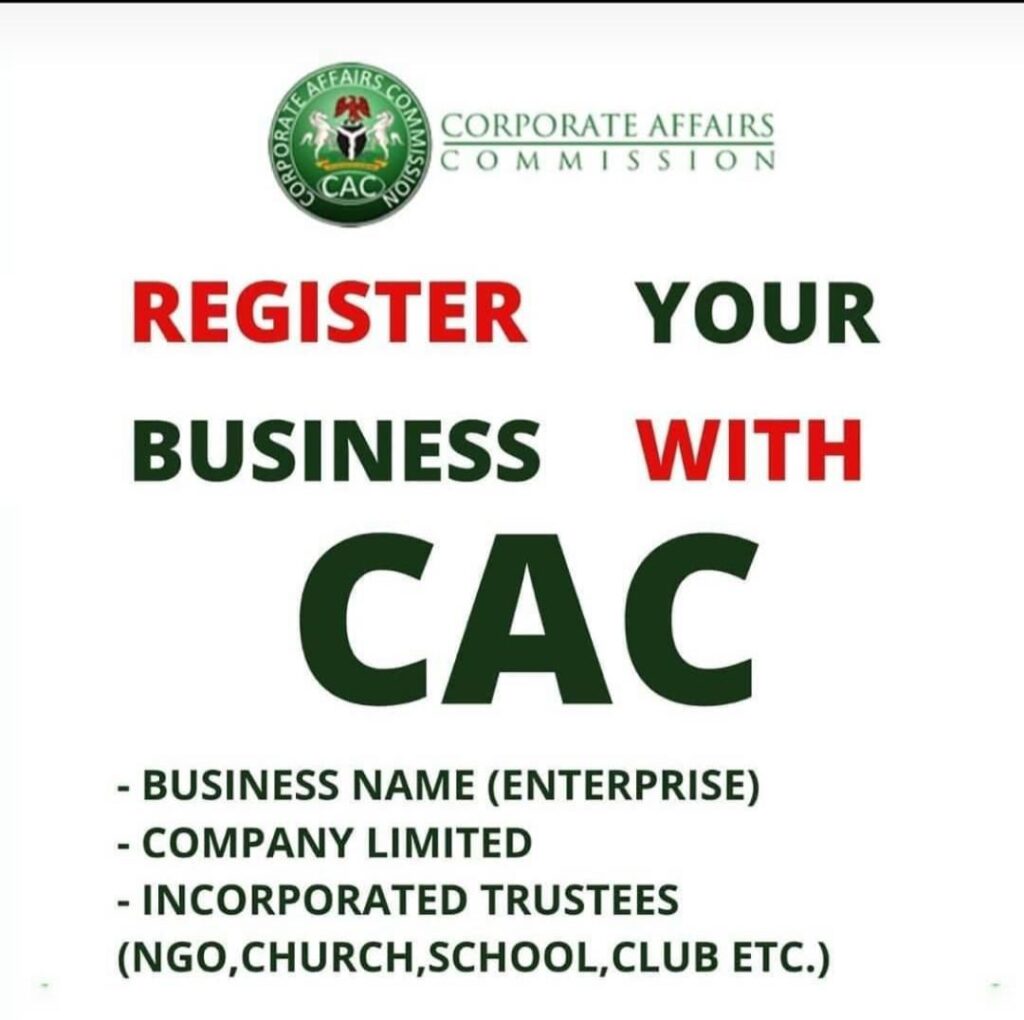
Here’s the bottom line: both BN and RC are legitimate paths to legally operating your business in Nigeria. Neither is universally “better.” What matters is which one aligns with your goals, your scale, and your vision for the future.
If you’re just starting out and keeping things simple → Business Name (BN) gets you moving quickly.
If you’re building something serious, scalable, and investment-worthy → Registered Company (RC) gives you the legal armour and corporate credibility you need.
And if you’re still not 100% sure which is right for your specific situation, we’re happy to walk you through it. At Digital Flames Limited, we’ve helped hundreds of Nigerian entrepreneurs make this exact decision and come out on the other side with a registered business, a professional website, and a real digital presence.
Your business deserves to exist on paper, on Google, and in the market. Let’s make that happen.
Ready to register your business the right way? Contact Digital Flames Limited today via WhatsApp, call us on +234 810 362 7898 or +234 904 522 8823, or visit digitalflamesltd.com to get started.
Digital Flames Limited is an accredited CAC registration agent based in Oluyole, Ibadan, Nigeria. We provide CAC Registration, Website Design, Digital Marketing, Brand Identity, and Global Music Distribution services for Nigerian entrepreneurs and creatives.